A Very Personal MacBook Pro Disaster
For the first time in 15 years, I’ve had a Mac product fail utterly. A 2018 MacBook Pro. The experience confirms the observations of others.
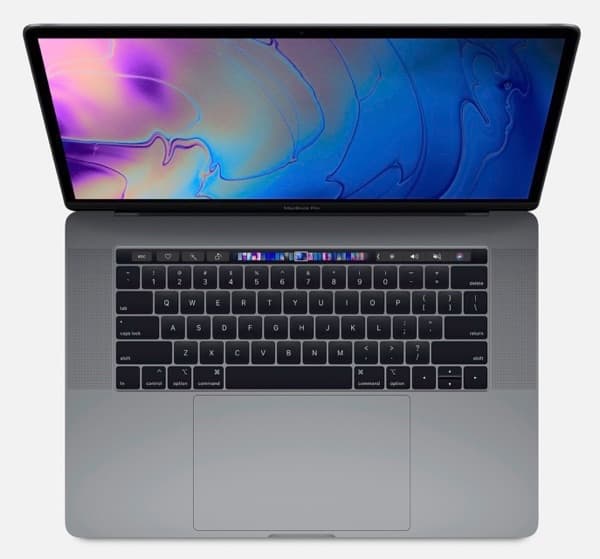
Apple’s 2018 MacBook Pro.
It’s Personal Now
Normally, I don’t pay too much attention to complaint about Mac failures. In any production process, there’s a small percentage of machines will will prove defective. That’s what warranties and AppleCare are for. But I’ve rarely been bitten, a healthy reminder of previously favorable statistics for Apple.
But now I’m in a position to nod approvingly when customers complain about MacBook Pro keyboard issues (and other problems) because a 2018 MacBook Pro in my family has totally failed, a few months after purchase, via the USB-C ports. The external display flickers. External disk drives and SSDs take 20 minutes to mount, then disappear randomly. An external keyboard will work for an hour, then just quit. All four USB-C ports are affected. This Mac is going in for repair, (under warranty) and I’m sure the motherboard will be replaced.
That means the soldered-in SSD will be also be replaced, and we’ll have to restore from a backup to a new SSD. Ycch.
I am sure this rare. I’ve read a lot about MacBook Pro keyboard issues, but not port failures. I’m sure there are a few that get quietly fixed because the customer doesn’t get vocal.
The Community Also Speaks
Just today, I read this: “Apple’s latest laptops are the worst the company has ever made for 4 major reasons.” Some of the arguments therein that one normally would dismiss start to make a little more sense.
Recently, Apple blogger John Gruber blamed departing Apple designer Jony Ive for the keyboard issues on recent MacBook Pro, saying it was Ive’s obsession with making thin devices that led to a poorly designed keyboard.
I mentioned that notion on a recent TDO podcast without having seen Gruber’s writings. It makes sense, however. Make the case too thin, and you take away the design freedom of the keyboard engineers and force them into an engineering corner. (Where have we heard this notion before? 2013 Mac Pro.) Hence the Butterfly design. But there’s more from the BI article.
Back when Apple introduced a MacBook Pro that ran on Intel’s powerful Core i9 chips in 2018, it was discovered that the laptop didn’t have the proper cooling systems to keep the chip cool during workloads….
Apple addressed the issue with a software update fix, and the problem was improved. But the MacBook Pro chassis is still too thin to properly cool a powerful chip like the Intel Core i9. [An unproven assertion. Still….]
This thin design also forced previous generations of MacBook Pros into using LPDDR RAM memory, which maxed out at 16 GB. The best HP notebooks have been a little thicker, clunkier, better cooled, but they featured 32 GB RAM. A MacBook Pro that maxes out at 16 GB RAM isn’t a “pro” machine. You all wrote me in article comments about that. Over and over. I heard you.
And so, I admit, my perspective has changed in a very tangible way. Do I think all these anecdotes constitute iron-clad engineering data? No. But I’m here to report my own experience, and that’s worth doing.
This 2018 MacBook Pro has been beautiful and fast. When it worked.
0 Response to "A Very Personal MacBook Pro Disaster"
Post a Comment