New iMac Pro Launches a New Wave of Macs
There’s been some fuss about the new iMac Pro not being upgradable, but I think that misses the point. It is, after all, an iMac in essence. Albeit a fast one. And so the real question is not, why isn’t it upgradable for the pro? Rather, the question is, who is this kind of Mac aimed at and what signal does it send about Macs of the future?
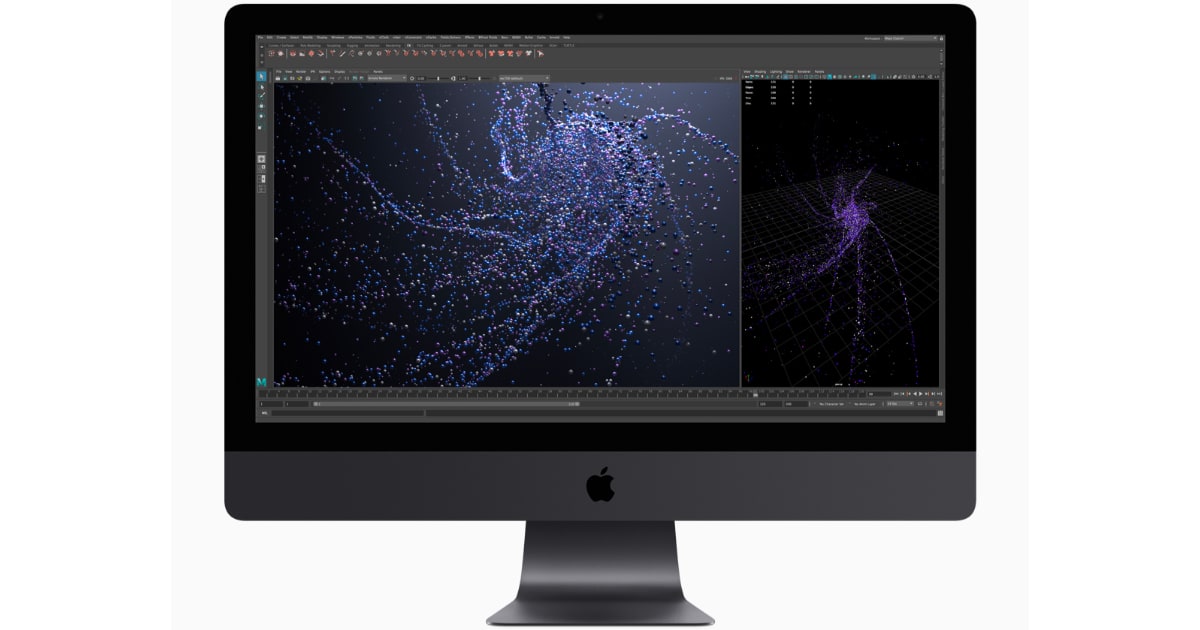
iMac Pro available now with delivery on December 27th
The first thing to know about this new Mac is that it’s designed for users who require great performance out of the box. It’s not aimed at engineering users who, at first glance, want to go after it with a screw driver. Those institutional and small business users are likely to appreciate the convenience and sheer power and will likely buy it in the configuration they need. After all, how many consumers on a budget are going to anguish between a $5K and a $7K decision?
While many observers lament that this Mac can’t be tinkered with, because of its “pro” moniker, it’s important to remember those users who appreciate this kind of equipment. Over at TechCrunch, Matthew Panzarino properly and smartly points out in this great article:
The [Apple] messaging was interesting to me. It was absolutely, clearly, a love letter to developers. Most of the Mac and iOS developers I know use iMacs or MacBook Pro machines – especially given the limited nature of the Mac Pro as it exists now.
It certainly feels to me that the criticism about the iMac Pro’s lack of upgradability is a conceit that overlooks the focus of a powerful Mac, the promise that it presents and the assuredness that the coming Mac Pro will be the machine directed towards the tinkerers. “Apple Continues to Work on All-New Mac Pro With Upgradeable Design.”
Another conceit that’s easy to float is that Apple doesn’t understand it’s customers and uses marketing hype to make up for defects in the design of a new Mac. Nonsense. Again, the Matthew Panzarino article (above) clearly lays out the case that Apple knows exactly the kind of customer who needs and will love a machine like this.
The Giant is Awake
This Mac suggests that the sleeping giant is awake. The strides made by Apple’s competitors during the Dark Mac Years (2015-16) suggest that Apple is just getting started with a new era of Mac thinking. The Mac Pro, which is likely to appear in 2018, is probably not the end of the story. Most assuredly, the 2018 Mac Pro will be expensive. However, the Mac revolution won’t end there.
The bigger story is that Apple now feels that the role of the Mac can’t be fulfilled without a focus on sheer computational power. Enterprise, government and military users got tired of cute Macs without a lot of power. Given that an iPad Pro or even an iPhone has enormous computational power, it only makes sense to reinvigorate the Mac line as a family of very, very fast and capable machines that just can’t be duplicated any place else, by any other platform. And can do things no iPad Pro can do.
And so I expect this thinking to extend to the MacBook Pros as well. Following this logic that a headless Mac Pro will be a virtual supercomputer, what might be in store for the next Mac mini could also be a pleasant surprise.
It’s going to be an exciting next few years with the Mac. Some Macs will remain aspirational for the average consumer, but Apple is also smart enough to present us with an invigorated line of Macs that traditional customers can afford. The jazz of the best, most powerful Macs will inspire us all to upgrade to the best possible place in a spectrum of new, very fast Macs with amazing capabilities inherited from the top of the line.
The iMac Pro isn’t the end; it’s the beginning of the new Mac thinking. I can’t wait.
Next Page: The News Debris For The Week of December 11th. Net Neutrality is Dead – Not So Fast
Page 2 – News Debris For The Week of December 11th
Net Neutrality is Dead – Not So Fast
The most obvious way to deal with the impending loss of Net Neutrality is to paint a picture of permanent doom and gloom. But, in many ways, the battle isn’t over. In addition, this decision by the FCC could, in fact, lead to unforeseen events that will work in the consumer’s favor.

The prospective loss of Net Neutrality is a galvanizing event.
What’s driving the whole kerfuffle is the notion by most Americans that a fair and equal internet, properly regulated like a public utility, is best for all. The notion that the major carriers and ISPs, who are not universally loved, will get to abuse the American public even more is a very strong motivational factor.
This notion drives how people think about their services, their choices and the state of their bank account. It drives their feelings when they enter the voting booth. It drives the thinking of States’ Attorneys General. It also drives the thinking of the carriers and ISPs who, despite posible business opportunities, might be loathe to be singled out as the most hated of them all.
And then, there’s the enormous financial muscle and influence of those companies who have the most to lose in an unbalanced internet. Amazon, Apple, Facebook, Google and Microsoft have the technical and financial resources to think about ways to counter extortion and preferential service that upsets the modern day, proven effective operation of the internet. These are smart, resourceful companies. And there may be other efforts as well.
Here’s a good article that summarizes much of this thinking. “After FCC Abandons Net Neutrality, States Take Up The Fight.”
If representatives in Congress don’t pass legislation to ensure Net Neutrality for the long term, overriding the FCC’s politics, they could find themselves in trouble at the 2018 mid-terms. See: “Net neutrality repeal gives Democrats fresh way to reach millennials.”
This fight is not over.
More Debris
• If you loved the TV series Battlestar Galactica, you’ll be happy to know that Apple has enlisted Ronald D. Moore to develop a new space drama series.
Created and written by Moore, along with Fargo co-executive producers Matt Wolpert and Ben Nedivi, the untitled series explores what would have happened if the global space race had never ended.

Yes! More like this please.
I’ve often said that there are plenty of opportunities for Apple to develop great entertainment that’s not just a repeat of frequently gruesome, violent and depressing TV. This project appears to be something that’ll be fun and something Apple can be proud of.
• Why would Apple buy Shazam? As this Macworld article points out, “It’s not just about identifying songs.” I like the thinking that author Simon presents here.
• With Apple, things are always changing. The old has to make way for the new, even if it seems many customers are comfortable and dependent on the old. Could Apple’s iTunes Music Store be one of those as Apple tries to emphasize Apple Music? At iMore, Serenity Caldwell doesn’t think so. “Apple’s Music Store isn’t going anywhere — but the iTunes branding might.” Even so, it’s food for thought. What would you do if streaming were the only option and you couldn’t buy music from Apple anymore?
• Jean-Louis Gassée writes the Monday Note. It’s always thoughtful. In this edition, author Gassée provides his “iPhone X Third Impressions”
By incorporating visual recognition into the iPhone X, Apple took a substantial risk. Could they succeed with a technology that has stymied Microsoft and Samsung? After four weeks with an iPhone X, I’m led to some (mostly favorable) conclusions…and some questions about the direction of other Apple products.
Good stuff.
• Finally, when Apple came out with the Lightning connector, some were dubious. Another proprietary connector? Critics wailed: “But we already have a standard! MicroUSB!” These days, we’ve come to appreciate Apple’s wisdom. And how things have changed. “My new year’s resolution: no more MicroUSB.”
Particle Debris is a generally a mix of John Martellaro’s observations and opinions about a standout event or article of the week (preamble on page one) followed on page two by a discussion of articles that didn’t make the TMO headlines, the technical news debris. The column is published most every Friday except for holiday weeks.
0 Response to "New iMac Pro Launches a New Wave of Macs"
Post a Comment