Apple’s Present Day Innovation is Not What You Think

Occasionally, observers criticize Apple for not being innovative enough, but they’re off the mark.
There are several ways to define innovation, and I think that contributes to an enduring misunderstanding. One can take the approach that innovation means a breathtaking, unexpected new product that ignites the company’s fiances and takes the tech world by storm. One can argue that the iPod and iPhone did just that. See: “The Day Steve Jobs Launched the iPod and Changed Apple Forever.”
The other way to look at innovation, and I think this is he proper one, is the application of original thinking and engineering finesse combined with significant resources to attack modern problems and create solutions that make life better for customers. In new ways.
The first definition above is often applied to Apple when Steve Jobs was trying to save the company in the late 1990s. The dramatic “One More Thing” announcement at events was cleverly designed to whet our appetites and make us believe that Apple was imaginative and resurgent. That turned out to be true, but Steve Jobs knew that he had to back up the hype with real, desirable products. He demanded as much from his engineers.
Another factor is the size of the company. In 2001, Apple’s total revenue for the year was about US$5.4 billion. Today, it’s over $200 billon. When a company is small, dramatic changes are a significant fraction of revenues. They have an impact. And the company can turn on a dime.
When a company is much larger, innovative products tend to be overwhelmed by the scope of the company. They’re innovative, but they don’t have the same impact on the company’s directions and finances. They may be great, but their appreciation is lost amidst all the other positive things the company does. Putting them into perspective is harder and requires insight.
Modern Innovation at Apple
Apple has made some significant advances in terms of how we live (health and fitness) and how we interact with devices. For example, we have AirPods, HomePod, ARKit, HomeKit, HealthKit, and amateur photography to name a few. Our Apple watch tracks our pulse, exercise and soon, perhaps, our blood glucose. An iPhone with a fast 64-bit processor executes 100 billion instructions to deliver breathtaking photos.
One of the most notable innovative contributions lately has been Apple’s cooperation with the company called Cochlear and their new Cochlear implants. Cochlear created the product, but Apple’s made MFi licensing available at no charge.
Why does Apple get involved in such seemingly small projects? It’s because new frontiers in health can leverage from many of the core technologies that Apple has developed over the years. Apple could just settle for cool toys and gizmos, but instead actively looks for ways to utilize its technologies, in an innovative way, to make life better for customers. That’s the real legacy that drives innovation.
There was a day when it was enough for Apple to organize our music in iTunes and our photos in iPhoto/Photos. That did make our life better. Today, the challenges Apple can take on are vaster and more sophisticated. But, in most cases, they don’t have that one-off “One More Thing” sex appeal that punctuated the older Apple.
Today, it doesn’t make sense to crave an endless succession of dramatic events presented by someone like the master showman of the past, Steve Jobs. The scale and subtlety of modern technical challenges in AI, big data, autonomous vehicles, Health, AR and VR won’t look like an iPod pulled out of a CEO’s jeans pocket for the first time.
We’re beyond that, and Apple executives know it.
Next Page: The News Debris For The Week Of July 24th. Failure was an option.
Page 2 – News Debris For The Week Of July 24th
Failure Was An Option
Windows Phone is dead. Microsoft’s 4th quarter results affirm it. And so, Jean-Louis Gassée, in his always extraordinary Monday Note, explores how the Microsoft culture resulted in that failure.
This essay is full of interesting insights.
As a retired Bill Gates postsciently said: Success is a terrible teacher.
Mr. Gassée resisted the temptation, but I shall not as I include the reaction to the original iPhone by (then) Microsoft’s CEO Steve Ballmer in 2007.
That video is both amusing and instructive, and it underlies the theme of Mr. Gassée’s article. A company’s directions, indeed culture, is driven by the vision and technical astuteness of its executives.
From the article:
For a long time, Microsoft’s orthodoxy placed the PC at the center of the world. When smartphones took center stage, the company’s propaganda censured talk of a Post-PC world. Smartphones and tablets were mere ‘companion devices’.
Amidst the consumer movement to mobility, such agenda cannot and did not endure. And so Window Phone was doomed from the start.
Mr. Gassée concludes:
Now, let’s look around. Are there successful companies soon to be victims of their own culture?
More Debris
One of the things that’s very hard to do, and something that’s been lacking in products reviews is the cyber security aspect. Reuters is reporting: “Consumer Reports to consider cyber security in product reviews.” It will be interesting to see how well Consumer Reports does with this new initiative. Will CS have credibility?
Apple is making a big push for Apple Pay in China, according to Business Insider . BI points out that it’s a challenging market. My take is that while Apple was early with Apple Pay, other organizations recognized how important this kind of secure payment technology could be and planned to go their own way all along. Apple has had to work hard to compete, and it’s not surprising at all that not everyone fell into line behind Apple Pay. That’s just how modern technology evolves.
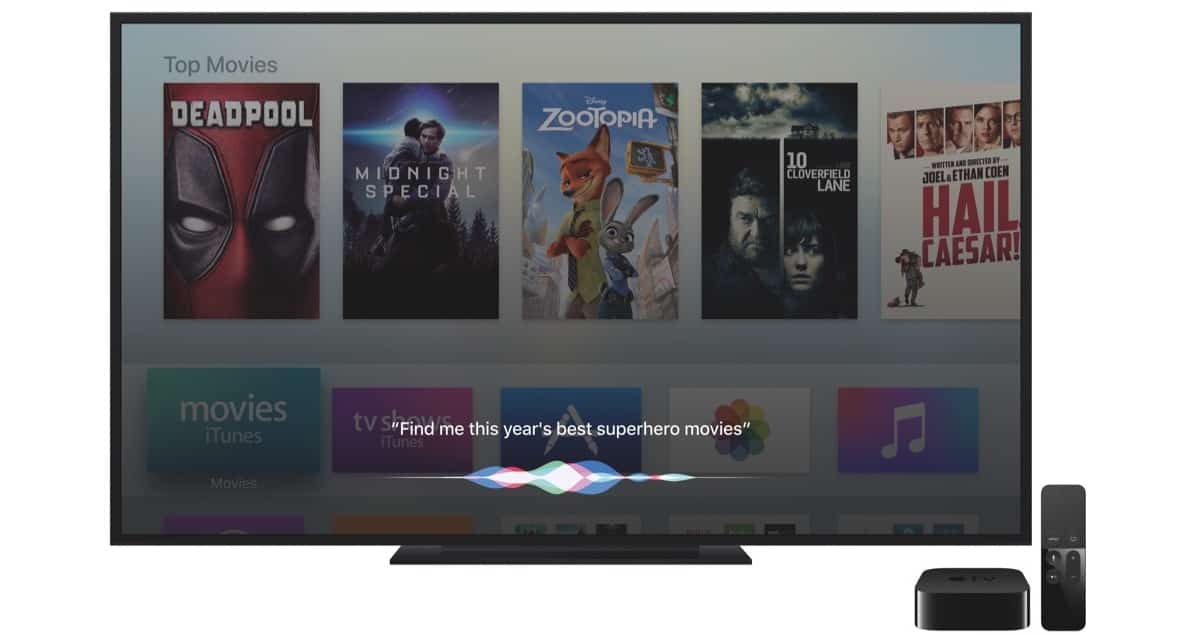
4th gen Apple TV with Siri is basically obsolete.
There’s more fuel on the Apple TV fire, namely that Apple is frittering its talents away in small-time original TV content and not shoring up its primary connection to the customer via great hardware. The discussion continues in that vein. See: “Apple TV falls behind competition as Internet-connected TV continues to grow.”
Finally, Neil Cybart (Above Avalon ) looks at Apple and AR in his customary thorough way. The title is deceptively simple, but the analysis is not. “Apple Glasses Are Inevitable.”
___________________________
Particle Debris is a generally a mix of John Martellaro’s observations and opinions about a standout event or article of the week (preamble on page one) followed on page two by a discussion of articles that didn’t make the TMO headlines, the technical news debris. The column is published most every Friday except for holiday weekends.
0 Response to "Apple’s Present Day Innovation is Not What You Think"
Post a Comment