Apple Pay Rival Systems Will be Costly Failures
It seems that too many corporations and banks want to create rival alternatives to Apple Pay. They have their own agenda for inserting themselves into the payment process, but always seem to forget that putting themselves ahead of the customer with half-baked, potentially problematic systems is never the right thing to do. Most will have to learn the hard way.

First, there was CurrentC from the MCX Consortium. The idea there, inspired by Walmart, was to avoid those pesky discount fees the banks charge on each credit card transaction and pocket that money themselves.
Their process: withdraw the money directly from the the customer supplied bank account number. Brilliant, right? CurrentC died a slow, tortured death. “CurrentC Rolls off its Deathbed and into the Grave.” Even Walmart saw the handwriting on the wall and introduced its own payment system, Walmart Pay.
Next, we had Samsung Pay which uses a less secure technique that still depends on the vulnerable magnetic stripe reader. It was inevitable that a hack would be discovered. It was. As TMO’s Jeff Gamet explains,
Researchers demonstrated the hack at this year’s Defcon, as noted by The Verge. It relies on Samsung Pay’s magnetic secure transmission for use with traditional magnetic stripe readers. Samsung devices with this feature generate a magnetic field that transmits transaction information—including a one-time token—to a stripe reader.
If that wasn’t enough, three Astralian Banks collectively want access to the iPhone’s NFC subsystem so they can concoct their own payment system that bypasses Apple Pay. Apple has said “No!” and isn’t shy about pointing out the security implications. “Apple says opening up iPhone NFC would ‘fundamentally diminish’ security as Australian banks resist Apple Pay.”
Last, but probably not the end of this trend, is the announcement by CVS Health this week that it has ginned up its very own payment system. The article I saw was at PC Magazine. “CVS Pay Aims to Rival Apple, Google.”
The cleverly named CVS Pay allows customers to make payments, pick up prescriptions, and earn ExtraCare loyalty points with one scan at the checkout.
The major problem with this payment system has been adroitly analyzed by Jonny Evans at Apple Must. “Is CVS addicted to wasting money?”
Here is how customers shop with Apple Pay: Pull out the iPhone or Apple Watch, tap, choose payment card, pay.
Here is how customers shop with CVS or Walmart: Pull out the iPhone, open the app, tap the app to find the correct section of the app, show their device to someone on the desk, that person will scan the app, customer chooses the payment card and pays.
It’s a Rube Goldberg system that will have customers asking why they can’t just pay more simply.
Sure, We Can Do That!
In summary, there are at least three major problems with these alternative payment methods to Google and Apple Pay that use NFC.
- The method is typically self-serving, putting the company’s needs before the consumer’s. The user experience is awkward.
- The organization implementing the alternative typically doesn’t have sufficient security expertise, access to the hardware and software integration of the iPhone nor corporate resources to roll out a uniform, secure national initiative.
- The pipe dream of securing and exploiting all that collected customer data turns out to be more expensive and technically difficult than the rosy predictions proposed to management.
Having a different payment mechanism for many different merchants is a wearying experience, and soon, I predict, after some expensive experiments, merchants will discover that it’s a more secure, less expensive proposition to use existing loyalty systems and then simply take the customer’s money with chipped cards and, eventually, contactless payment methods already in place.
But they’ll have to fail first to discover all that.
Next page: The Tech News Debris for the Week of August 8th. More money please!
Page 2 – The Tech News Debris for the Week of August 8th
More Money Please!
Hulu launched in 2008. It’s founding members were excited about the prospects of internet TV and offered a free service. However, it had trouble making money in the early days and has had to continuously evolve. Now the days of free Hulu are over.
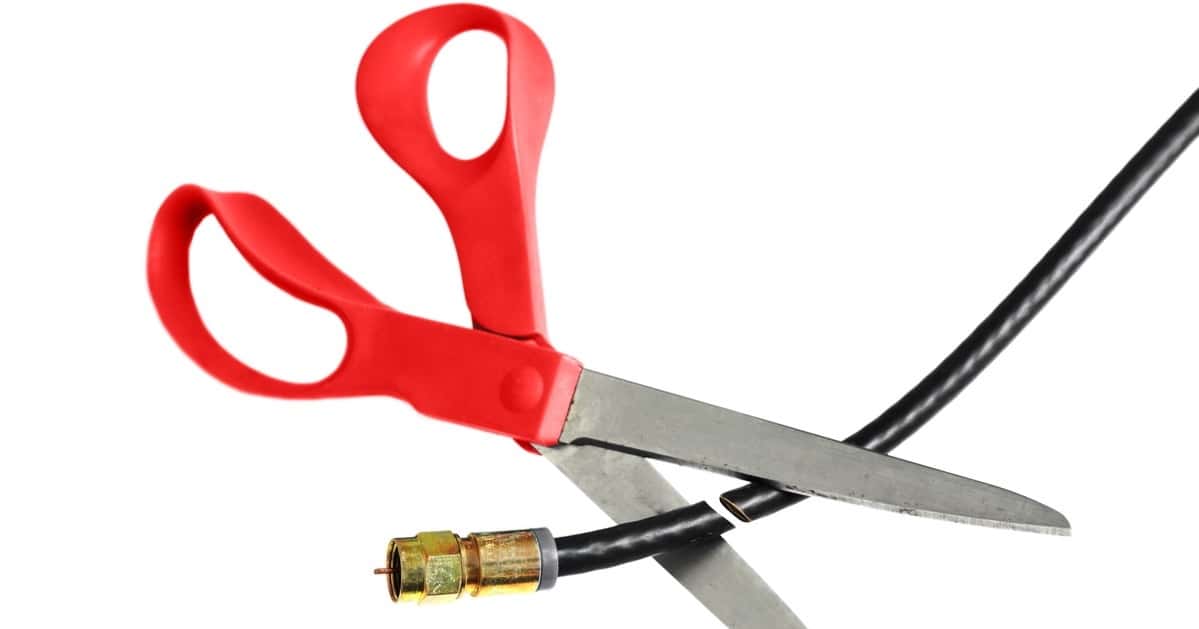
Recode has the story. “The free TV on the internet experiment died years ago. Now Hulu is burying it.” The subtitle tells more of the story. “The TV guys really don’t want to give away their best stuff, so Hulu’s site and apps will go subscription-only.” Given that consumers are going to pay for video content, one way or the other, one has to question, in a similar fashion, whether the long-term prospects for lower, enduring costs in a cord cutting mode are possible.
Consumer choices may boil down to ease of use, customer service (or the lack of need for it) and the equipment they happen to favor, such as tablets. But make no mistake. The thirst for a steady, rising revenue stream will prevail. But first, we must be led to believe the new ways are better.
Then, over time, as classic cable and satellite services decline and their expensive packages fade, the fanfare over new products will seduce most customers back to where they were in monthly costs.
As a result, we’ll shift the way we watch TV, but a wholesale reduction in the long term industry revenues just isn’t going to happen. The evolution of Hulu proves that.
____________________________
TMO has pointed to the Fast Company interview with Eddy Cue and Craig Federighi. So did MacRumors. What I thought was interesting was the blistering MacRumors Buying Guide for Macs and the stinging juxtaposition with Eddy Cue’s comment: “…you’re only as good as the last thing you did.”
Ouch.
However, as I’ve also mentioned before, Apple’s new MacBook Pros look to be very exciting. Here’s the best summary of what’s known about these drool-worthy Macs from our national treasure Mark Gurman. “Apple Said to Plan First Pro Laptop Overhaul in Four Years.” So we have that to look forward to. As for the rest of the Macintosh lineup? No one is talking.
Despite the near universal gnashing of teeth about what Apple will do with the Mac lineup as a whole, it turns out that the MacBook, recently upgraded in April, is doing very well indeed, as is the rest of Apple’s notebook line. See: “Apple’s Notebook Shipments Rise 30% on Strength of New 12-Inch Retina MacBook.”
Similarly, as has been reported before, Apple’s iPhone SE is also selling quite well. And while Tim Cook has a focus on revenue, not market share, and the iPhone SE has dragged the iPhone line’s ASP down, Apple has to be happy at the new markets it has both solidified and opened up. Tech Crunch has important details. “The iPhone SE is selling just as Apple planned in the U.S. and Europe.”
Many observers have a difficult time adjusting to Tim Cook’s Apple. So powerful and influential was Steve Jobs’s personality that, five years after his death, it’s still hard to understand the changes Tim Cook has had to make to Apple in ways that don’t kowtow to the shadow of Mr. Jobs. Carolina Milanesi at Tech.pinions explains beautifully. “A Different Kind of Apple.”
Understanding Apple’s relationship to the enterprise has always been difficult precisely because Apple takes an unconventional approach to the enterprise. Accordingly, some business executives are appalled by what Apple won’t do. Conversely, some are very pleased by what Apple does do. This article at Network World offers many insights. “Mixed emotions on Apple’s enterprise evolution.”
Math is important. Maps are important. Technical accuracy is important. Glossing over what seems to be unnecessary technical precision in this day and age can have unintended, dire consequences. And so, because we’re all into Google and Apple maps, I’ll point to this sad story. “Kansas couple sues IP mapping firm for turning their life into a ‘digital hell.’”
From what I’ve read, the average iPhone has about 26 apps installed. It varies a little by country. And yet, according to Business Insider there will be 5 milllion apps in the iOS App Store by 2020. At some point, this system will break. Phase one is when developers stop making any money at all. Phase two is when Apple moves on to the Next Big Thing. (Siri + search.) Walt Mossberg sums it up. “I just deleted half my iPhone apps — you should too.”
I have found this to be true. I am deleting apps that I have experimented with faster than I download new ones. How about you?
____________________________
Particle Debris is a generally a mix of John Martellaro’s observations and opinions about a standout event or article of the week (preamble on page one) followed on page two by a discussion of articles that didn’t make the TMO headlines, the technical news debris. The column is published most every Friday except for holidays.
0 Response to "Apple Pay Rival Systems Will be Costly Failures"
Post a Comment